 blog
Best Hiking Gear for Beginners 2026: What You Need
Last Updated: 25 October 2026
Quick Summary
Hiking gear for beginners in 2026 comes down to a short list: footwear, layers, water, navigation and a pack that carries it all comfortably. You need less than the shops suggest, and a 32L pack with real compression suits most first-year trails better than a 65L load hauler.
- Pack by weight, not by worry, and carry at least one litre of water for short walks.
- Wear a moisture-wicking base layer, insulating mid-layer and waterproof shell, and avoid cotton against your skin.
- Spend on footwear, a rain shell and a pack that fits; save on clothing, accessories and gadgets.
- A 20-35L pack covers most day walks, with weight carried on your hips.
- A water-repellent pack is not waterproof, so line it with a dry bag in sustained rain.
Table of Contents
- Best Hiking Gear for Beginners 2026: Start With the Essentials
- Your Beginner Hiking Checklist for a Day on the Trail
- What to Wear Hiking for Beginners: Layers, Footwear and Extras
- Frequently Asked Questions
Best Hiking Gear for Beginners 2026: Start With the Essentials
Hiking gear for beginners in 2026 comes down to a short list: footwear, layers, water, navigation and a pack that carries it all comfortably. You need less than the shops suggest.
Watch out: a heavy expedition pack for gentle day walks is the most common beginner mistake. A 32L pack with real compression suits most first-year trails better than a 65L load hauler.
Your Beginner Hiking Checklist for a Day on the Trail
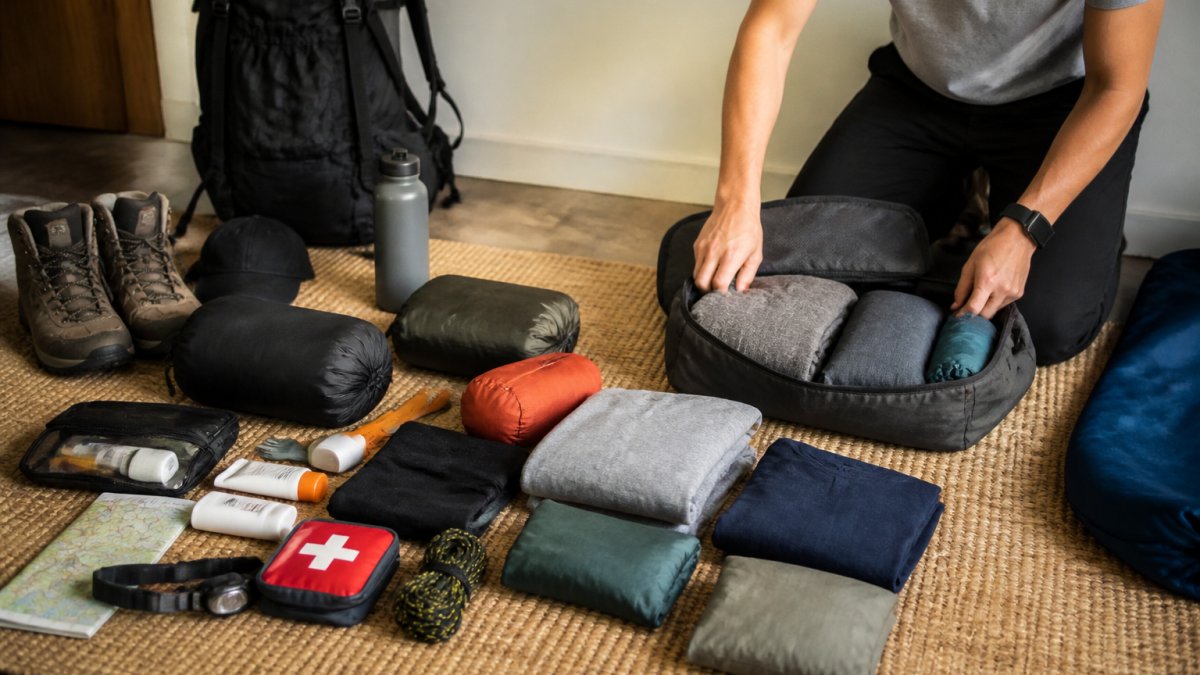
A beginner hiking checklist for a day walk is short: water, food, a rain layer, sun protection, a basic first-aid kit, a charged phone and a paper map or offline navigation. Pack by weight, not by worry.
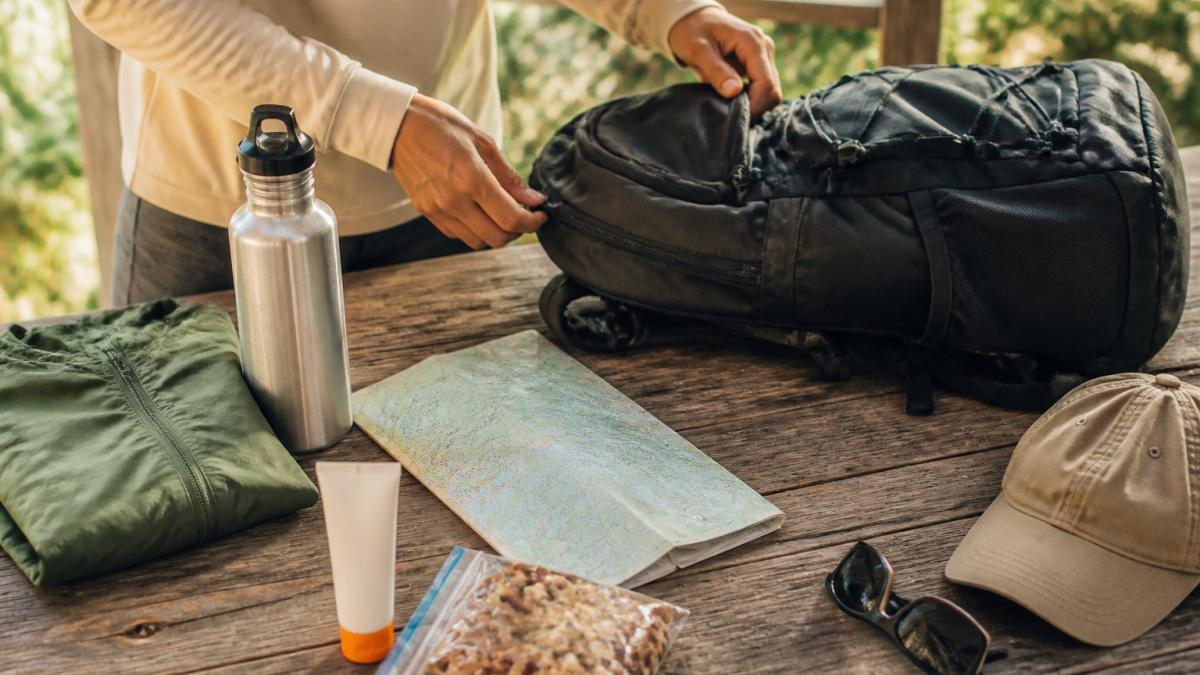
Before you leave:
- Water: at least one litre for short walks, more in heat
- Food: snacks plus a proper lunch for anything over two hours
- Rain shell and warm mid-layer, even on a clear forecast
- Sunscreen, hat and sunglasses
- Small first-aid kit and any personal medication
- Charged phone, plus a paper map or downloaded offline map
- Headtorch, because daylight fades faster than plans do
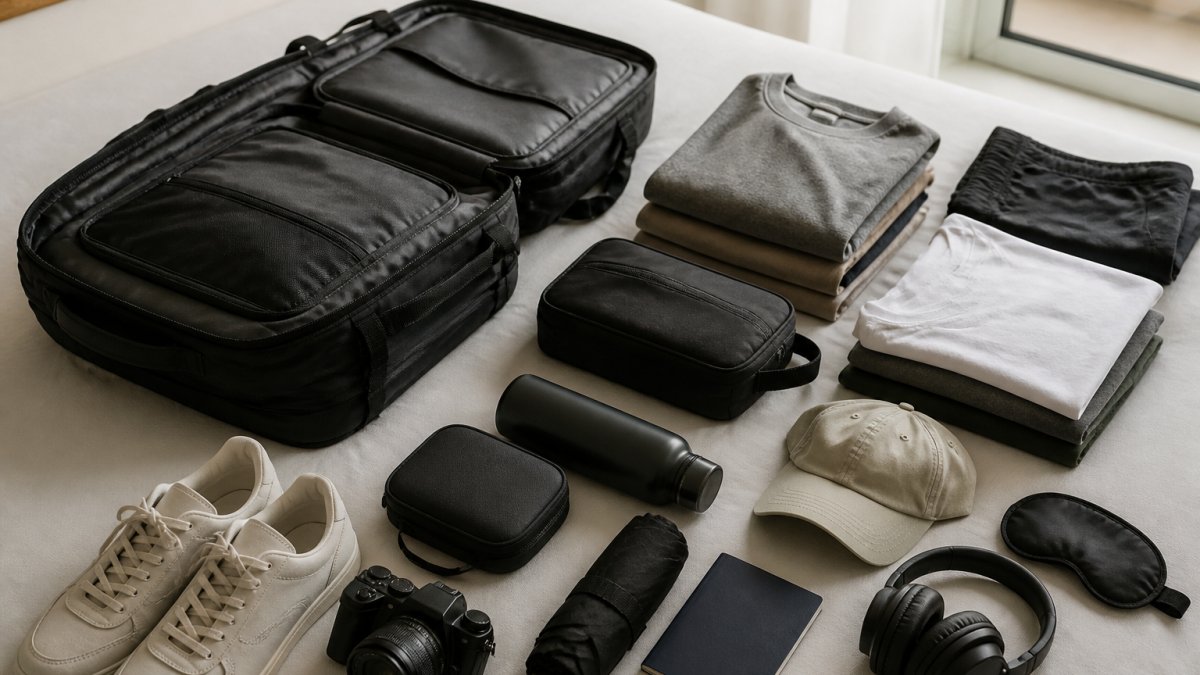
If organising gear is where you struggle, our guide to travel gear for organised packing covers how to group and pack a day kit so nothing gets left behind.
What to Wear Hiking for Beginners: Layers, Footwear and Extras
What to wear hiking for beginners is a layering question, not a shopping question: a moisture-wicking base layer, an insulating mid-layer and a waterproof outer shell, plus sturdy footwear with tread.
Cotton is the one fabric to avoid against your skin. It holds sweat, dries slowly and chills you when the wind picks up. Synthetic or merino base layers handle sweat far better.
Footwear decides your day: trail shoes suit gentle, well-formed paths, while ankle-support boots help on rocky or uneven ground. Wear them in before a long walk, and size up slightly for swollen feet.
Carrying layers and extras means your pack matters as much as your clothing. Our guide to durable travel backpacks for frequent flyers explains what to look for in a pack built for regular use.
Best hiking backpack for beginners: what to look for
The best hiking backpack for beginners fits your torso, carries weight on your hips and holds only what you need. Look for padded shoulder straps, an adjustable sternum strap and a waist belt that transfers load off your shoulders.
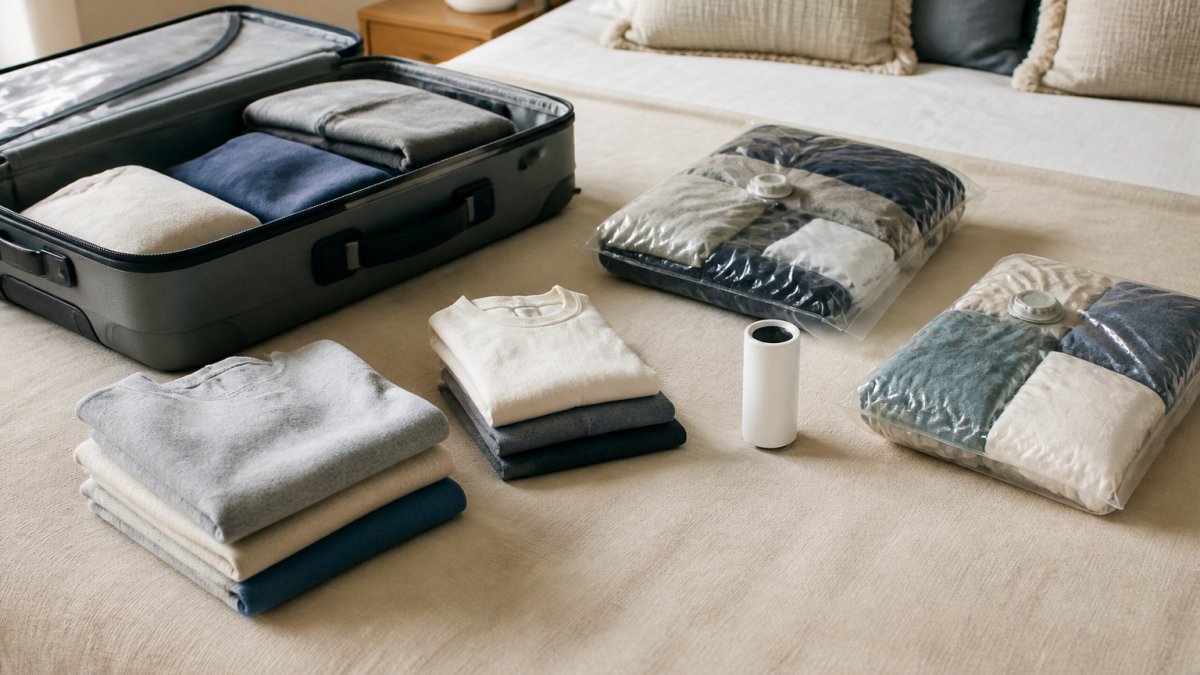
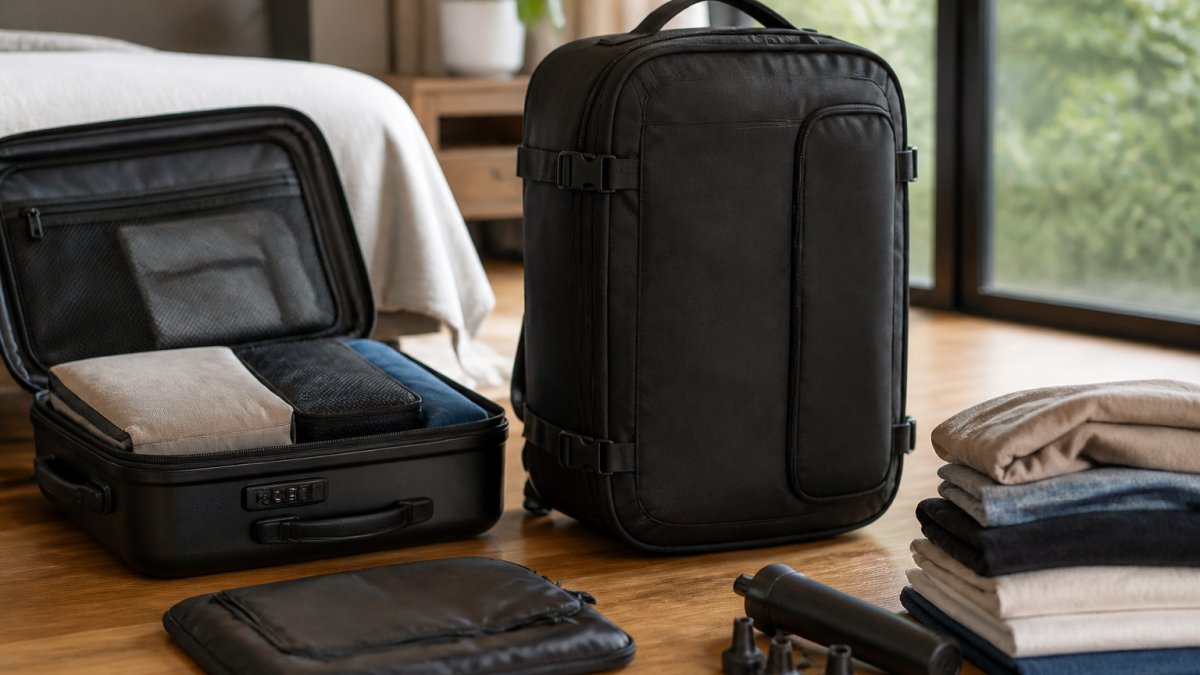
A 20-35L pack covers most day walks. The VENTUREBUILT Vacuum Compression Travel Backpack uses a 32L base with a TPU compression compartment and included air pump to reduce clothing bulk, and it expands in depth when you need more room. Compression reduces bulk, not weight, so pack light regardless.
Hiking gear on a budget: where to save and where to spend
Hiking gear on a budget works when you spend on function and save on fashion. Spend on footwear, a rain shell and a pack that fits. Save on clothing, accessories and gadgets, where cheaper options often perform fine.
| Item | Where to spend | Where to save |
|---|---|---|
| Footwear | Yes, fit and grip matter | Avoid cheap soles |
| Rain shell | Yes, waterproofing counts | Skip premium brands |
| Backpack | Yes, fit and comfort | Skip extra pockets |
| Base layers | No, synthetics work | Merino is a luxury |
| Navigation | No, phone plus map | Skip GPS devices |
| Cooking gear | No, borrow or skip | Day walks rarely need it |
Borrow or hire first, then buy once you know what you actually use, many beginners never touch half of what they bought in year one.
Buying a compression pack is worth weighing up carefully. Our honest breakdown of whether a vacuum compression backpack is worth it covers what it does and does not solve for a beginner.
Watch out: a water-repellent pack is not waterproof. In sustained rain, line it with a dry bag or pack cover rather than trusting the exterior fabric.
Frequently Asked Questions
What gear do beginners need for hiking?
Start with a beginner hiking checklist built around safety and comfort: supportive shoes or boots, a water bottle holding at least one to two litres, a rain jacket, sunscreen, a hat, snacks, a basic first-aid kit and a small daypack. You do not need specialist equipment for your first walks. Add items as your distances grow, and check the weather forecast before every trip so you pack for the conditions rather than a generic list.
Are hiking boots necessary for beginners, or can I wear runners?
Hiking boots are not essential for every beginner. For well-formed, dry tracks, a pair of sturdy runners with good grip can be enough. Choose boots or sturdier shoes when the trail is rocky, muddy or steep, or when you plan to carry a heavier pack. Whatever you wear, break it in on shorter walks first and pair it with moisture-wicking socks to reduce blisters.
How do I choose the best hiking backpack for beginners?
Look for a daypack sized to your trip, usually 20 to 35 litres for a day hike, with padded shoulder straps, a hip belt and a back panel that sits comfortably against your spine. Try it on loaded before you buy, and check that the harness adjusts to your torso length. If you also travel, a dual-purpose option such as a compression travel backpack can handle both trail days and carry-on trips, though always check your airline's current size and weight limits.
First trails teach you what gear you actually reach for. Start light, walk a few routes, then upgrade where you feel the gap. At VENTUREBUILT, our Vacuum Compression Travel Backpack pairs a 32L base with expandable depth, a dedicated TPU compression compartment, an included air pump and separate laptop, document and wet-item sections, so day-walk essentials stay organised and compact. Get started with VENTUREBUILT and pack a lighter, tidier bag for your first season on the trail.