 blog
Compression bags for travel 2026: what works
Last Updated: 23 October 2026
Quick Summary
Compression bags for travel reduce the bulk of soft clothing by removing excess air through manual or electric pumps, shrinking a week's worth of garments from 15 litres to roughly 8-10 litres. They save approximately 30-40% more space than packing cubes, though they reduce bulk rather than weight.
- Compression works best on natural fibres like cotton and wool; synthetics compress less effectively.
- Fold clothes neatly and lay them flat inside the bag for even compression.
- Electric pumps take 2-3 minutes; manual pumps require more effort but work just as well.
- Most bags hold their seal for several days, so week-long trips may need re-compressing mid-journey.
- Stop compressing when resistance increases noticeably to avoid damaging seams or the valve.
Table of Contents
- What compression bags actually do
- Compression bags vs packing cubes: which saves more space
- How to use compression bags for travel
- Frequently Asked Questions
What compression bags actually do
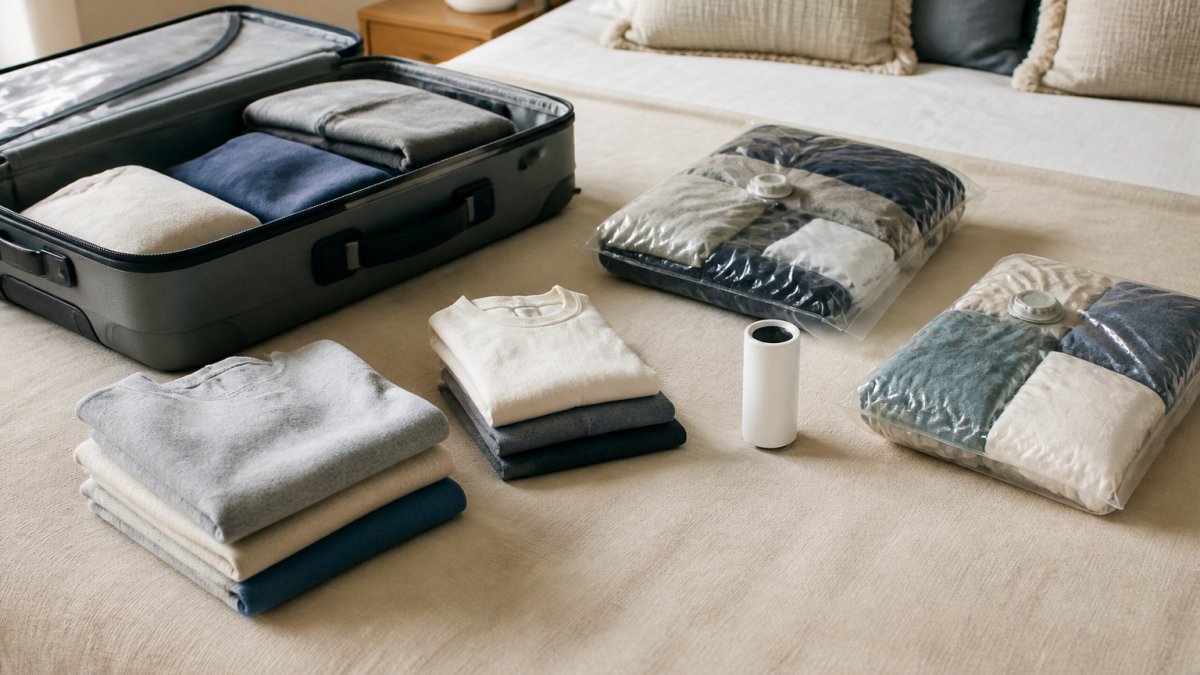
Compression bags reduce the bulk of soft clothing by removing excess air: seal items inside, then use a manual or electric pump to extract air.
A pile of jumpers, trousers and jackets filling half your backpack can shrink to a quarter of the space.
One key distinction: compression reduces bulk, not weight. Your clothes weigh the same, only the room they take up changes.
Compression bags vs packing cubes: which saves more space
Packing cubes organise items but don't reduce volume.
Compression bags actively shrink the space soft items occupy: a week's clothing in a 15-litre cube occupies roughly 8-10 litres once air is removed.
Packing cubes excel at organisation and quick access; compression bags prioritise space efficiency.
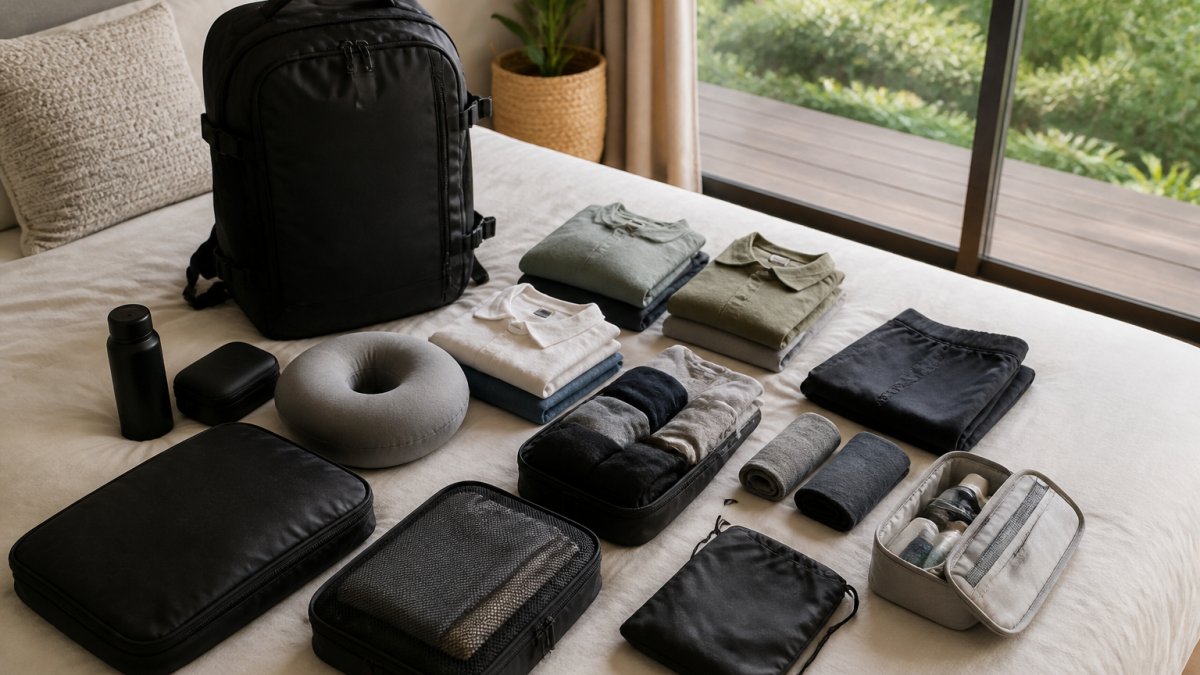
Many travellers use both: compression for bulky clothing, smaller cubes for accessories and electronics.
How to use compression bags for travel
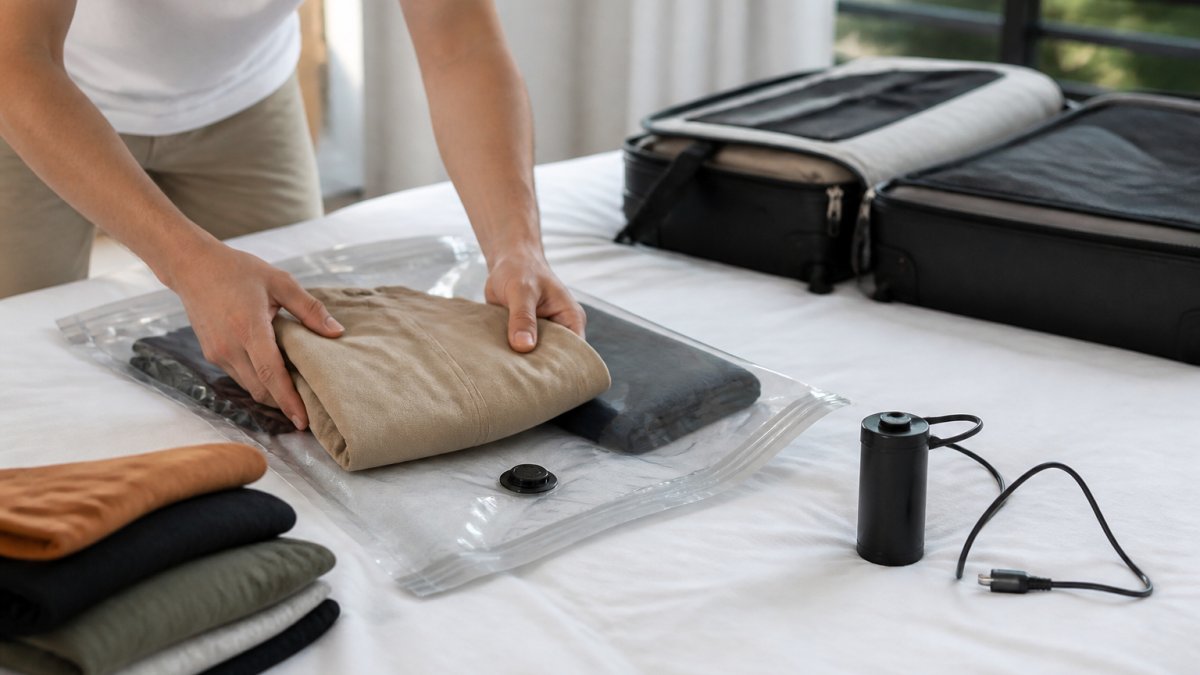
Fold clothes neatly and lay them flat inside the bag, organised packing compresses more evenly.
Once full, seal the valve, attach your pump and remove air. An electric pump takes 2-3 minutes; manual pumps need more effort but work just as well.
Stop when resistance increases noticeably. Over-compressing can damage seams or the valve. The bag should feel firm but not rock-hard.
Compress at home before you leave. Most bags hold their seal for several days, so trips over a week may need re-compressing mid-journey.
Store the pump in an accessible pocket, and check your airline's current battery rules before flying.
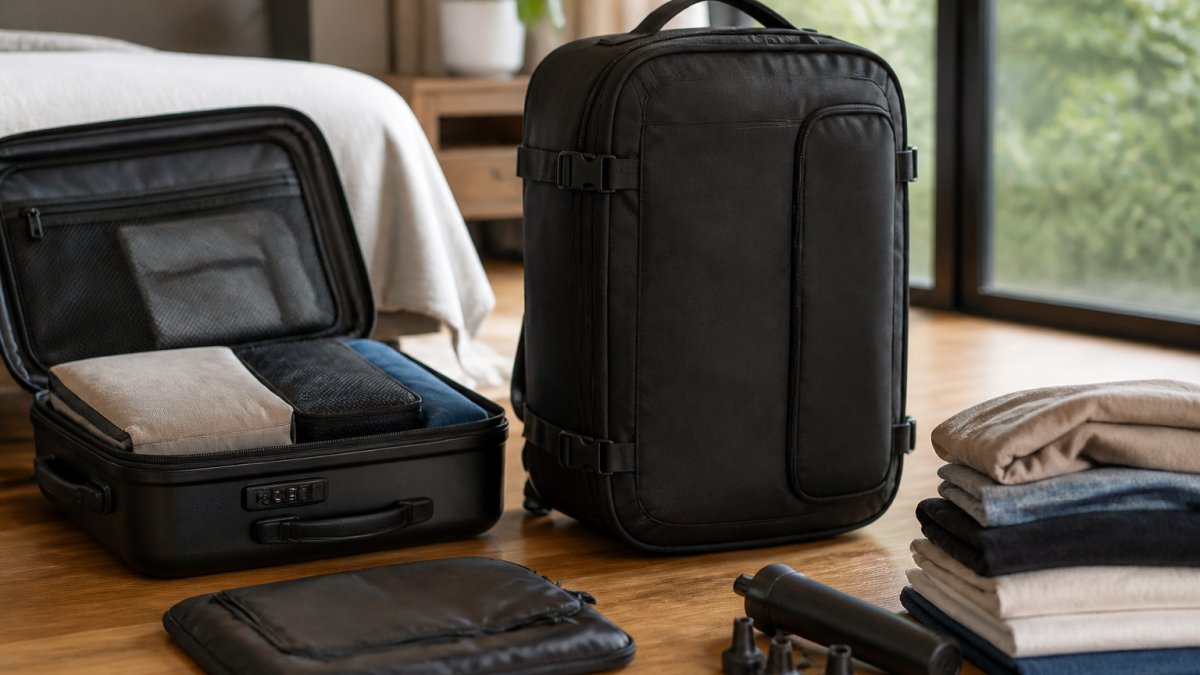
Compression bags work best with thoughtful packing. The VENTUREBUILT Vacuum Compression Travel Backpack includes a dedicated TPU compression compartment and a portable electric air pump, so you can compress clothing at home or whilst travelling. Explore how VENTUREBUILT's compression system simplifies carry-on travel.

Frequently Asked Questions
Do compression bags actually save space?
Compression bags reduce the bulk of soft items like clothing and bedding by removing excess air. They work best with natural fabrics (cotton, wool) and layered garments. The space saved depends on what you pack and how tightly you compress, typically 30-50% reduction in volume. Weight stays the same, so they don't help with baggage limits, but they do let you fit more into a fixed suitcase or backpack.
Are compression bags suitable for carry-on luggage?
Compression bags themselves are carry-on friendly because they're small and lightweight. However, whether your packed bag meets carry-on limits depends on your airline, fare type and total packed dimensions and weight. Always check your airline's current cabin-baggage rules before flying. Compression helps you fit more into a smaller backpack or cabin-sized suitcase, but doesn't reduce weight, so you still need to stay within your airline's weight allowance.
Can compression damage clothes?
Moderate compression is safe for most travel clothing. Compression works best for everyday wear, t-shirts, trousers, jumpers, jackets. Remove items promptly after travel and hang them to recover their shape.