 how-to
How to Maximize Carry-On Space: 7 Proven Packing Techniques
Table of Contents
- Understanding Carry-On Luggage Weight Limits and Dimensions
- Rolling vs. Folding: Which Packing Method Saves More Space
- How to Pack a Carry-On for a Week Without Overstuffing
- Using Packing Cubes and Compression Bags Effectively
- Maximising Dead Space: Shoes, Socks, and Hidden Pockets
- How a Vacuum Compression Travel Backpack Reduces Bulk
- Managing Toiletries and Liquids Within Airline Restrictions
- Weight Distribution and Balance for Comfortable Travel
- Data Table: Packing Technique Comparison
- Frequently Asked Questions
Last Updated: October 4, 2026
Understanding Carry-On Luggage Weight Limits and Dimensions
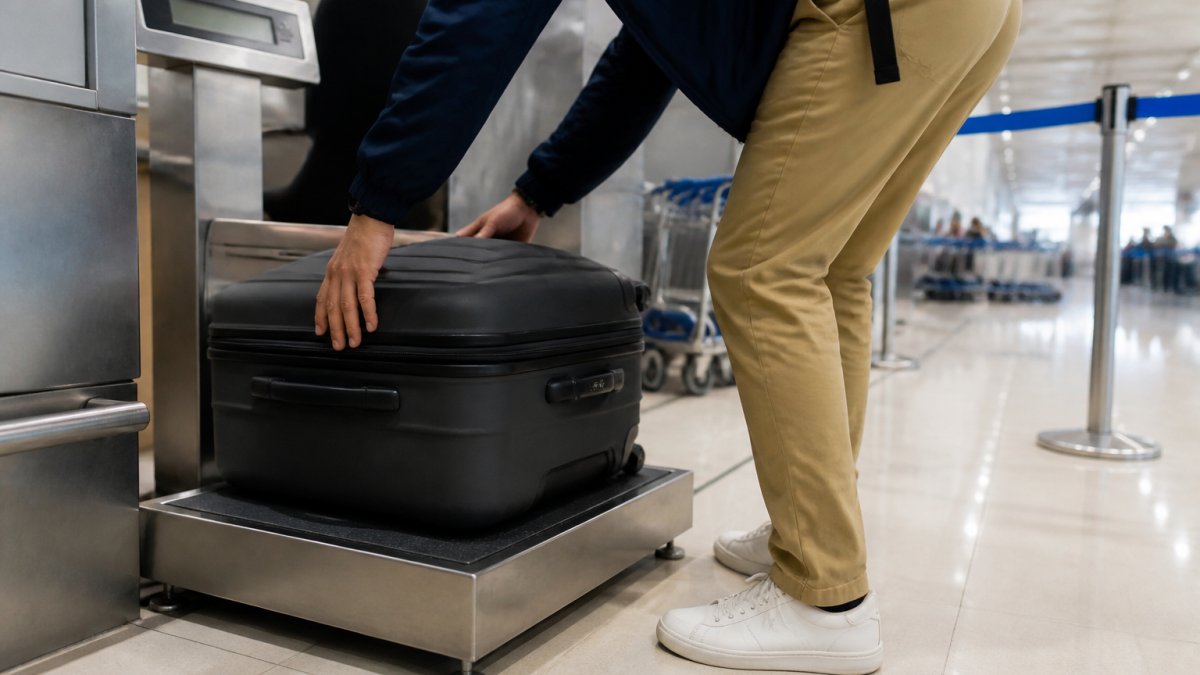
Most airlines set carry-on limits at 7kg and dimensions around 55cm x 40cm x 20cm. Check your specific airline before packing. Weight limits are strictly enforced at the gate, and oversized bags get checked regardless of how much they weigh.
The real challenge is packing smart so you don't exceed weight limits while working to maximize carry-on space.
Your carry-on can feel empty but still be overweight. A single pair of shoes, toiletries, and a laptop add up fast. Measure your bag first and know the exact weight limit, budget airlines enforce limits more strictly than full-service carriers.
Rolling vs. Folding: Which Packing Method Saves More Space
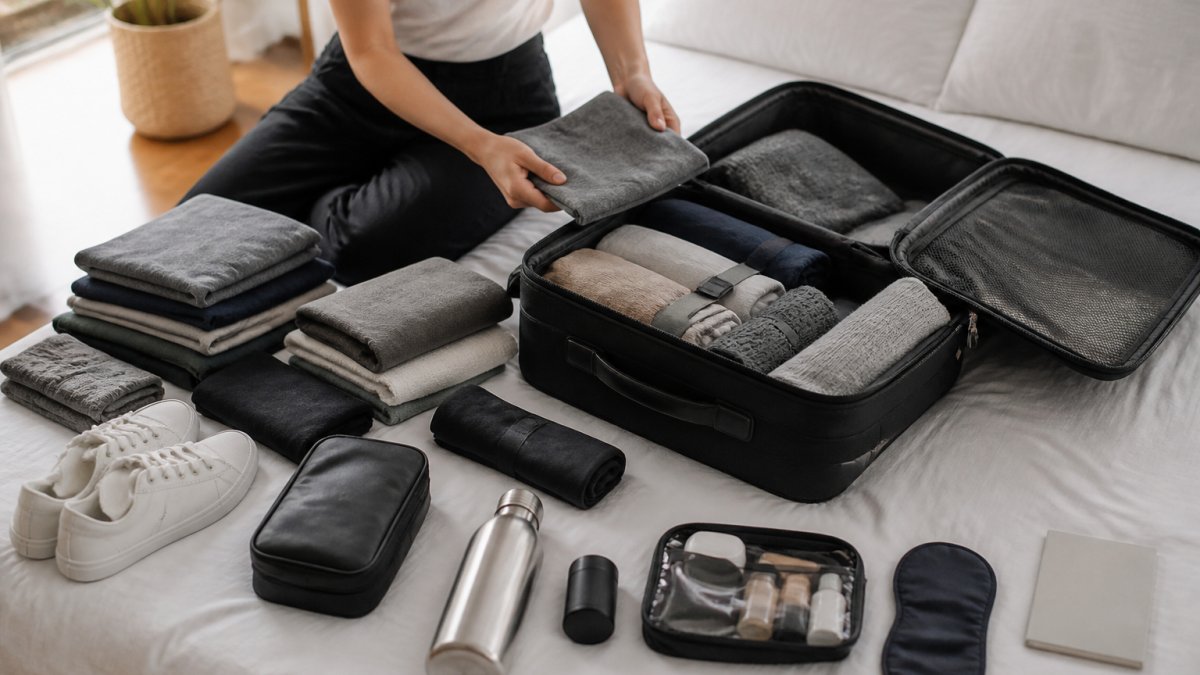
Rolling your clothes saves roughly 20-30% more space than folding. This is the most reliable space-saving technique for carry-on packing.
Rolling reduces air pockets, fits awkward shapes, and lets you see what you packed at a glance without unpacking everything.
The rolling technique that actually works:
- Lay the garment flat and smooth out wrinkles
- Fold lengthwise in half (sleeves tucked in)
- Roll tightly from the collar down to the hem
- Secure with a rubber band or packing cube
How to Pack a Carry-On for a Week Without Overstuffing
Most people overpack by 40-50% out of panic. Strategic packing and organisation during multi-city trips keeps your bag light and accessible.
Selecting a Capsule Wardrobe
A capsule wardrobe is a small collection of versatile pieces that mix and match. For a week's travel, aim for 7-10 pieces total.
Pack 3-4 neutral tops, 2 pairs of bottoms, 1 light layer, undergarments for 4-5 days, and 2 pairs of shoes. Stick to 2-3 colours so everything coordinates.
Layering for Multiple Climates
Layering lets you adapt to temperature changes without packing bulky items. A light merino wool top and a packable jacket handle most climates.
Merino wool is warm, lightweight, and doesn't smell after a day of wear. A packable jacket compresses to water-bottle size. Pack one base layer and one insulating layer instead of heavy coats.
Maintaining Organisation Across Multiple Cities
The re-packing strategy:
When you arrive at a new city, unpack completely. This lets you see what you actually wore, reorganise by upcoming activities, and reset weight distribution after using toiletries and adding souvenirs.
Use colour-coded packing cubes for each climate or activity type. When moving to a new city, unpack only relevant cubes while others stay compressed.
Plan laundry mid-trip to reduce initial packing, reuse items, and free space for souvenirs. If staying 3+ days in one city, wash on day 2.
Souvenir management:
If you're buying items during your trip, you need buffer space. Pack your initial week at 6.0-6.2kg (not 6.8kg) to leave 800g-1kg for purchases. When you repack at a new city, evaluate what you can leave behind (worn-out socks, used toiletries, clothes you didn't wear) to make room for new items.
Compression bags let you swap seasonal items mid-trip: compress summer clothes to free space for winter layers, then reverse when needed.
Using Packing Cubes and Compression Bags Effectively
Packing cubes organise your carry-on and compress clothes simultaneously. They're the single most effective space-saving tool available.
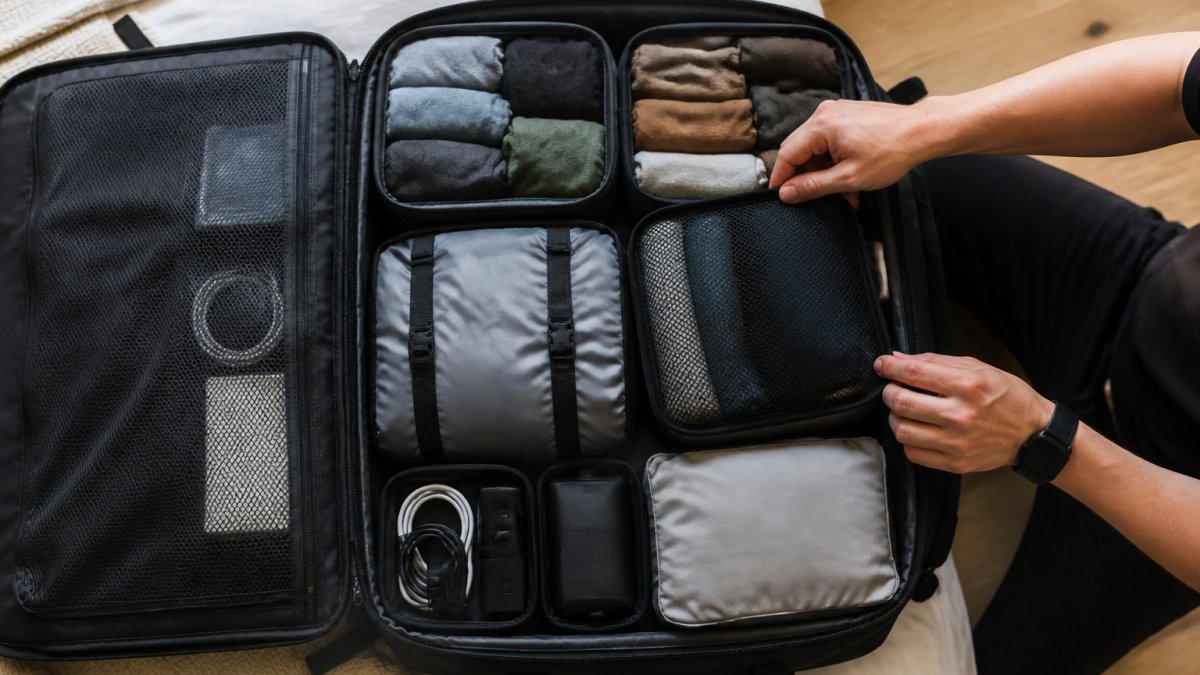
Packing cubes organise clothes so you find what you need without unpacking everything. Compression bags use a valve system to remove air, saving 40-50% of space.
Best practice setup:
- Use 2-3 medium packing cubes for clothing
- Use 1 compression bag for bulky items (jackets, jumpers)
- Keep electronics and documents in a separate small cube
- Use the remaining space for shoes and toiletries
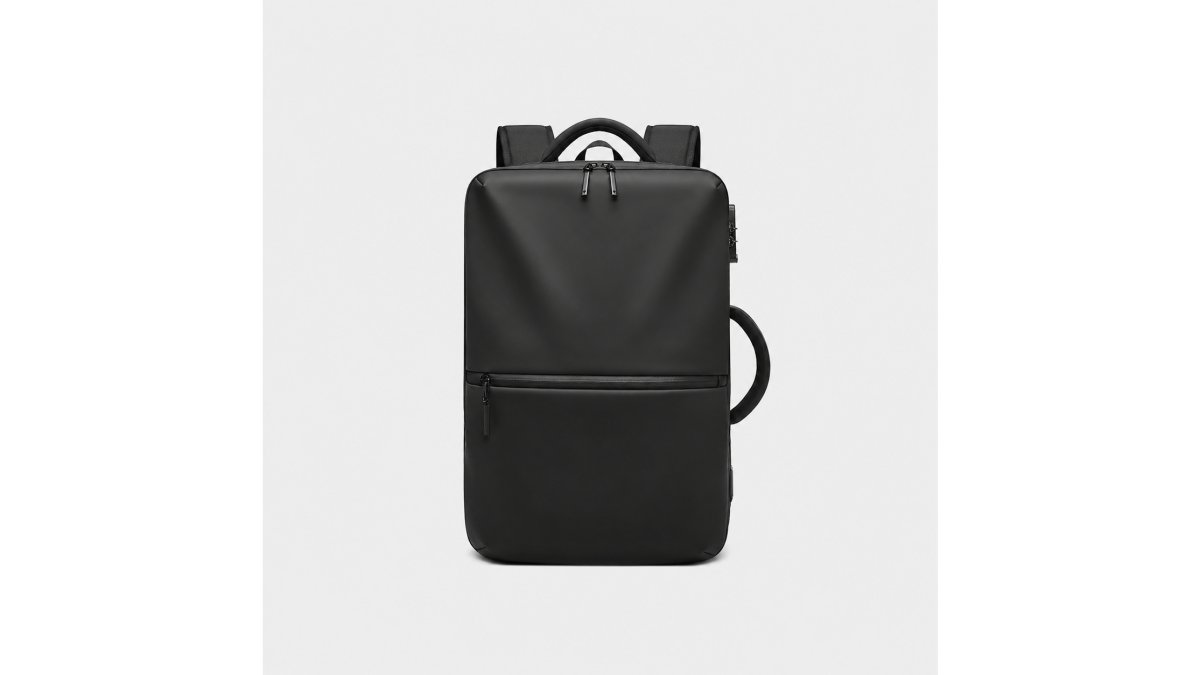
The vacuum compression travel backpack from VentureBuilt Co. includes an air pump specifically designed to work with compression bags. This eliminates the need to find a vacuum at your destination.
Maximising Dead Space: Shoes, Socks, and Hidden Pockets
Dead space is the area inside shoes, under zippers, and in side pockets. Using it properly adds 15-20% more capacity without adding weight.
What goes in shoes:
- Socks rolled tightly
- Underwear
- Small electronics (chargers, cables)
- Toiletry items in waterproof pouches
Hidden pockets exist in most luggage. Check for:
- Zippered compartments under the main opening
- Side pockets designed for water bottles
- Interior mesh pockets
- Laptop sleeves (if you're not using them for a laptop)
Stuff these spaces with lightweight items: socks, underwear, and small accessories. Avoid putting heavy items in pockets, as this throws off weight distribution.
How a Vacuum Compression Travel Backpack Reduces Bulk
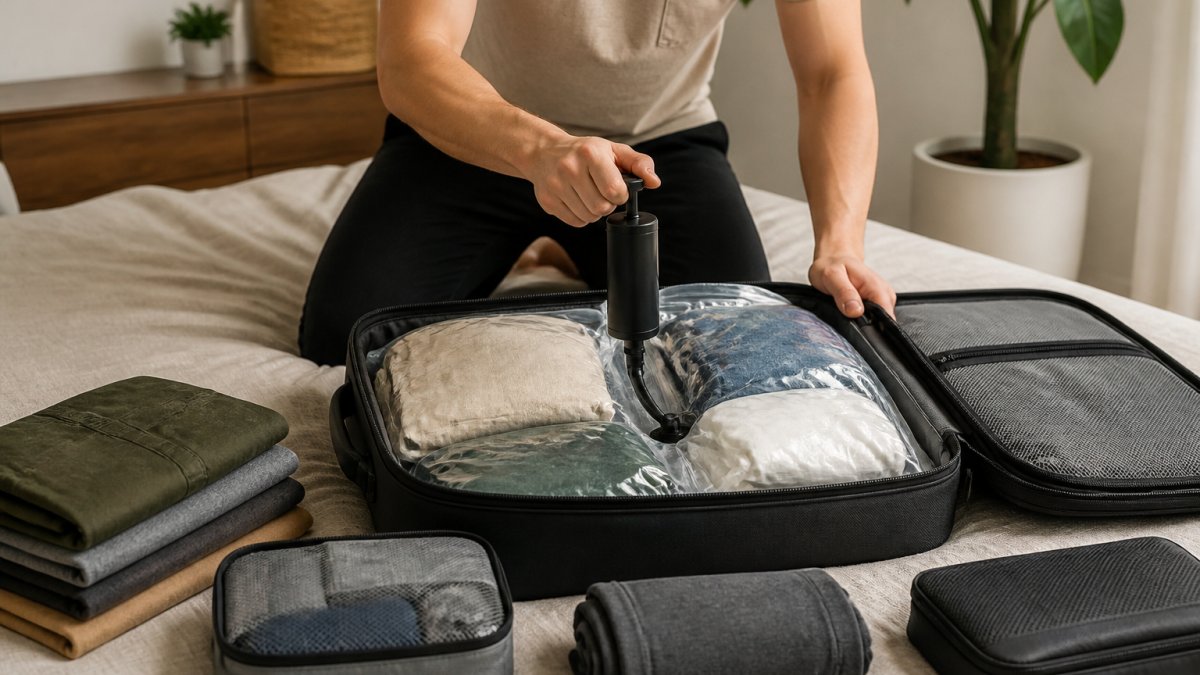
A vacuum compression travel backpack uses an air pump to remove air from packed clothing. This reduces bulk dramatically without damaging fabrics.
The mechanics: Pack clothes into the bag normally, then use the pump to create a partial vacuum. Air escapes through a one-way valve. Clothes compress to roughly 60% of their original volume.
Real advantages:
- Clothes stay compressed throughout your trip
- No need to find a vacuum cleaner at your accommodation
- The included pump is always with you
- Expandable storage grows from 32L to 25cm depth, giving flexibility
Most backpackers find this approach saves enough space to eliminate a checked bag entirely. For budget airlines, the savings add up fast.
Managing Toiletries and Liquids Within Airline Restrictions
Airline liquid restrictions limit you to 100ml containers in a clear bag (IATA). This applies to shampoo, conditioner, lotion, toothpaste, and anything gel-like.
Packing liquids smartly:
- Buy travel-size bottles (30-50ml) instead of decanting large bottles
- Solid alternatives save space: solid shampoo, solid deodorant, solid soap
- Keep all liquids in one clear ziplock bag for quick security screening
- Pack the liquid bag on top of your carry-on for easy access
Items that don't count as liquids:
- Solid deodorant
- Lipstick and solid cosmetics
- Toothpaste (actually counts as a liquid, but a small tube is allowed)
- Sunscreen in solid form
The weight of toiletries adds up. Switching to solid alternatives can save 300-400g, which matters when you're at 6.8kg and the limit is 7kg.
Weight Distribution and Balance for Comfortable Travel
Weight distribution serves two purposes: comfort during travel and compliance with airline weight limits. Most guides focus only on ergonomics, but strategic weight placement also helps you stay under the 7kg limit without sacrificing essential items.
The weight limit reality:
Airlines enforce carry-on weight limits strictly at the gate. Exceeding the limit by even 200g can trigger a checked baggage fee. On a return trip, that's unexpected costs. Weight distribution isn't just about comfort, it's about avoiding overage charges.
How to pack within weight limits:
-
Weigh everything before packing. Use kitchen scales or luggage scales to know the exact weight of each item. A pair of shoes weighs 400-600g. A laptop weighs 1.5-2kg. A week's worth of clothes weighs 800-1200g. These add up fast.
-
Prioritise by weight-to-utility ratio. Ask: "Does this item earn its weight?" A merino wool top (150g) worn 4 times has a better ratio than a heavy winter coat (800g) worn once. Solid toiletries (50-100g) beat liquid equivalents (200-300g).
-
Place heavier items closest to your back. This distributes weight toward your spine, reducing shoulder strain. Electronics (laptop, chargers, power banks) should sit in the main compartment against the back panel, not in front pockets.
-
Keep mid-weight items in the middle. Shoes and rolled clothing go in the central compartment. This maintains balance.
-
Reserve front pockets and side compartments for light items only. Socks, underwear, and documents belong here. Avoid putting anything heavier than 200g in external pockets, as this creates imbalance and makes one shoulder strap dig in.
Weight distribution across both sides:
If your backpack has side pockets, distribute weight evenly. A 500g water bottle on one side and nothing on the other throws off your balance immediately. If you're carrying a camera or power bank, put it in a centre compartment or split accessories between both sides.
Test your packed weight before the airport. Most luggage shops have scales. If you're at 6.8kg, you have almost no buffer for items added at the airport (a book, snacks, a souvenir). Aim for 6.2-6.5kg to give yourself a safety margin.
The compression advantage for weight management:
Compression bags don't reduce weight, but they reduce volume, which lets you pack more efficiently. By compressing bulky items (jackets, jumpers), you free up space for lighter alternatives instead of heavy ones. For example, a compressed packable jacket (300g) takes up less space than a folded wool jumper (400g), so you can include both without exceeding weight limits.
Real-world weight breakdown for a week's carry-on:
- Backpack itself: 600-900g
- Laptop and charger: 1.8-2.2kg
- Shoes (2 pairs): 800-1000g
- Clothing (7-10 pieces): 900-1200g
- Toiletries and accessories: 400-600g
- Documents, phone, wallet: 200-300g
Total: 5.7-6.6kg
This leaves 400-1300g for items you pick up during travel (books, souvenirs, food). If you're at the upper end, you have almost no buffer.
Data Table: Packing Technique Comparison
| Technique | Space Saved | Effort Required | Best For |
|---|---|---|---|
| Rolling clothes | 20-30% | Low | All trips |
| Compression bags | 40-50% | Medium | Extended travel |
| Packing cubes | 10-15% | Low | Organisation |
| Solid toiletries | 300-400g | Medium | Weight-conscious |
| Capsule wardrobe | 25-35% | High | Week-long trips |
| Dead space usage | 15-20% | Low | Every trip |
Frequently Asked Questions
How much weight can I actually pack in my carry-on before hitting the limit?
Most airlines allow 7-10 kg for carry-on luggage, though this varies by airline and aircraft type. Check your specific airline's policy before packing. A vacuum compression travel backpack with an included air pump lets you pack efficiently without guessing, compress clothing and gear to stay within weight limits while maximising what you bring. Weigh your packed bag at home to confirm you're within the allowance.
What's the best way to pack a carry-on for a week-long trip?
Start with a capsule wardrobe of 5-7 multipurpose pieces that mix and match. Roll clothes instead of folding to save 30% more space. Use packing cubes to separate clothing, toiletries, and tech gear. Wear your bulkiest items (jacket, boots) on travel days. Fill dead space in shoes with socks and small items. A vacuum compression travel backpack with an air pump lets you compress soft items further, leaving room for essentials without overpacking.
How do vacuum compression bags actually help with carry-on space?
Vacuum compression bags remove air from clothing and soft items, reducing their volume by 40-50%. You roll or fold items, seal the bag, then use a pump to extract air. This works especially well for bulky fabrics like jumpers, jackets, and towels. Many travel backpacks include a built-in compression system and air pump, making the process quick and reversible. Your gear expands back to normal shape when you reach your destination.
Should I wear my heaviest items on the plane to save luggage space?
Yes. Wearing your jacket, boots, or jumper on travel days frees up valuable carry-on space for other essentials. This also helps with weight distribution, you're not adding extra kilograms to your bag. Choose comfortable clothing for the flight, but prioritise pieces that take up significant space when packed. This simple strategy often saves 2-3 litres of luggage capacity.