 blog
blog
Best Carry On Backpack for International Travel
Table of Contents
- What Makes the Best Carry On Backpack for International Travel?
- Carry-On Luggage Size Limits Australia: What You Need to Know
- How to Pack a Carry-On Backpack Efficiently
- Capacity, Weight and Organisation: What to Look For
- Ergonomics and Suspension Systems for Long-Haul Comfort
- Materials, Weather Resistance and Long-Term Durability
- Security Features and Accessibility for International Travel
- Why VentureBuilt Co. Makes the Best Carry On Backpack for International Travel
- Frequently Asked Questions
Last Updated: October 2, 2026
What Makes the Best Carry On Backpack for International Travel?
The best carry on backpack for international travel is one that meets airline size and weight limits, distributes load through a proper harness, and keeps your gear organised and secure across long transit days. This guide from VentureBuilt Co. breaks down exactly how to choose one.
Most travellers focus on capacity first. That's backwards.
A 45L bag that gets gate-checked is worth less than a 32L bag that slides into the overhead bin every time. The carry on backpack that actually works for international travel balances four things: compliance, comfort, organisation, and durability. Get one wrong and the other three stop mattering.
Below, we'll show you how airline rules work, how to pack efficiently, and what separates a bag that survives a year of airports from one that falls apart after two trips.
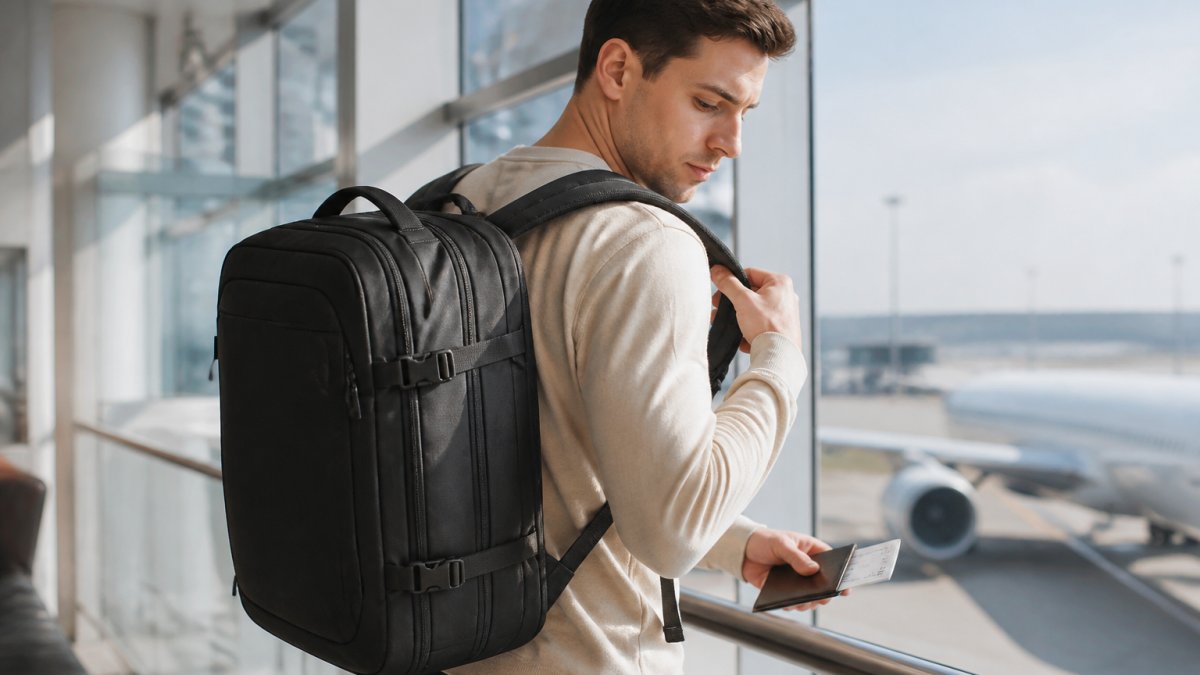
Carry-On Compliance and Airline Rules
Compliance is the first filter. If your bag doesn't fit the sizer, nothing else matters.
Airlines assess carry-on bags by linear dimensions, the total of length plus width plus depth. Domestic and international carriers set different limits, and budget airlines are usually the strictest. A bag that passes one carrier's sizer may fail another's.
Three rules keep you compliant across most airlines:
- Check the specific carrier's published limits before you fly, not after
- Measure your packed bag, not the empty one
- Keep a soft-sided bag, which compresses into a tight sizer where a hard shell won't
The practical move is to buy a bag slightly under the smallest limit you'll encounter. That buffer absorbs overpacking and bulky clothing.
Durability, Comfort and Security Features
Durability, comfort and security are what separate a bag you tolerate from one you rely on.
Look for abrasion-resistant fabric, reinforced stitching at stress points, and hardware that won't seize. Comfort comes from a harness that transfers weight to your hips rather than your shoulders. Security means lockable zippers and at least one hidden pocket for documents and cards.
What most guides miss is that these three traits interact. A heavily padded harness adds weight, which eats into your allowance. A lockable zipper adds hardware that can fail. The best bags balance all three rather than maxing out one.
Carry-On Luggage Size Limits Australia: What You Need to Know
Carry-on luggage size limits in Australia vary by airline, so there is no single national standard. Most domestic carriers publish their own maximum dimensions and weight allowances, and international carriers flying into and out of the country set their own rules too.
That means the same bag can be compliant on one flight and rejected on the next. The safe approach is to check your specific airline's published limits directly, since these change and are not set by a government regulator.
Australia's civil aviation safety regulator guidance on passenger baggage
A few practical points apply across most Australian carriers:
- Weight limits are often stricter than size limits, so a light bag matters
- Budget carriers enforce limits more consistently at the gate
- International long-haul flights sometimes allow a slightly larger cabin bag than domestic legs
If you fly multiple airlines, build your packing around the tightest limit in your itinerary.
How to Pack a Carry-On Backpack Efficiently
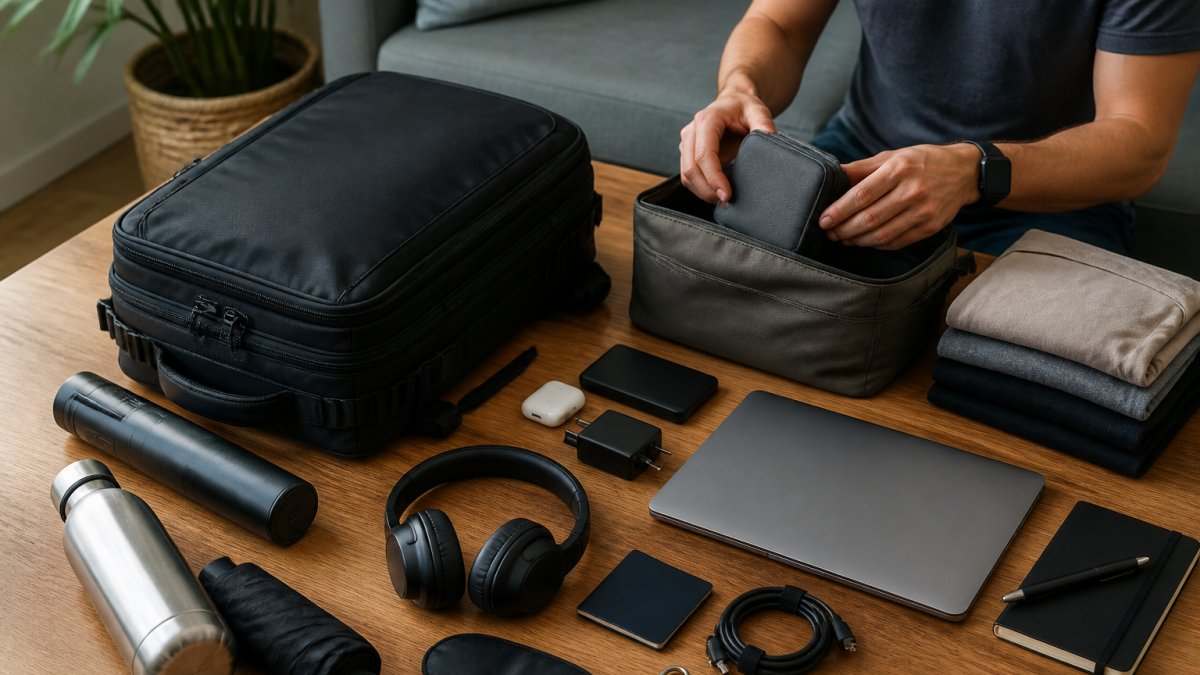
Packing a carry-on backpack efficiently comes down to three moves: roll soft items, use compression, and layer by access frequency. The goal is to remove air, not to remove gear.
- Roll t-shirts, socks and underwear to save space and reduce creasing
- Wear your bulkiest layer on travel days
- Place heavy items closest to your back for better weight distribution
- Keep cables, chargers and documents in quick-access pockets
- Use modular packing cubes so you can find items without unpacking everything
Packing for Cold and Hot Climates
Climate changes what you pack, not how much. Cold trips need bulkier layers, so compression does more work. Hot trips need lighter fabric, so volume drops but laundry frequency rises.
Using Vacuum Compression to Save Space
Vacuum compression removes the air trapped between fibres, which is where most of your bulk actually lives. A compression bag or a built-in compression system can shrink soft items dramatically.
Capacity, Weight and Organisation: What to Look For
Capacity in litres tells you volume, but weight allowance tells you what you can actually carry. A 40L bag packed to 12kg fails a 7kg limit just as badly as an oversized bag fails a sizer.
| What to Check | Why It Matters | Target |
|---|---|---|
| Capacity (litres) | Volume for trip length | 30-40L for 1-2 weeks |
| Empty weight | Eats into your allowance | Lighter is better for strict limits |
| Compartments | Keeps gear separated | Laptop, documents, wet items |
| Expandability | Adds space when needed | Adjustable depth |
| Quick-access pockets | Speeds up security | At least two external |
Ergonomics and Suspension Systems for Long-Haul Comfort
Ergonomics decide whether you can carry your bag for a full transit day without shoulder pain. A proper suspension system transfers weight from your shoulders to your hips, where your body can carry far more.
How the harness actually moves weight
The hip belt is the load-bearing element. When it sits on the iliac crest, roughly the top of your hip bones, it carries most of the bag's weight. Load lifters, the small straps at the top of the shoulder straps, pull the bag closer to your back and stop it sagging away from your spine. The sternum strap keeps the shoulder straps from sliding outward and stabilises the whole system.
Torso length, not height
Torso length is the distance from the base of your neck, at the C7 vertebra, to the top of your hip bones. Two people of the same height can have torso lengths that differ by several centimetres, which is why height charts are unreliable. Measure your torso length with a tape measure and a helper, then match it to the bag's adjustable range.
Body type and inclusive fit
Harness systems are not one-size-fits-all, and this is where most reviews stop short. Shoulder width affects where the straps sit: narrow shoulders need straps that angle inward, while broader shoulders need straps that sit wider to avoid pressure on the neck. Chest size affects sternum strap placement, and a sternum strap that sits too high or too low can restrict breathing on a long walk.
What to test before you buy
- Walk with the bag loaded for at least ten minutes
- Check that the hip belt sits on your hip bones, not your waist
- Confirm the load lifters sit at or above your shoulder line
- Make sure the sternum strap does not restrict breathing
- Test the bag with your heaviest expected load, not a light one
If a bag fails any of these, no amount of adjustment will fix it. Fit is a physical match between the bag and your body, and it matters more than any feature list.
Materials, Weather Resistance and Long-Term Durability
Materials determine how long a bag survives real travel. High-denier fabric, ballistic nylon and water-resistant coatings handle abrasion and light rain far better than thin polyester.
Security Features and Accessibility for International Travel
Security features protect your gear in crowded terminals, hostels and transit hubs. Lockable zippers, hidden pockets and a pass-through luggage sleeve all reduce risk and add convenience.
Why VentureBuilt Co. Makes the Best Carry On Backpack for International Travel
VentureBuilt Co. built its flagship travel backpack around the exact problems this guide describes: compliance, comfort and organisation.
Frequently Asked Questions
What is the best backpack for international travel as a carry-on?
The best carry-on backpack for international travel balances three things: it fits within airline size limits, carries your gear comfortably, and keeps everything organised. Look for a pack around 32 to 40 litres with a padded laptop compartment, lockable zippers and a breathable back panel. Vacuum compression systems, like the one on the VentureBuilt Co. flagship backpack, let you pack more without exceeding cabin baggage limits.
What size backpack is allowed on international carry-on?
Most international airlines allow cabin baggage around 56 cm x 36 cm x 23 cm, but the exact limit varies. In Australia, Qantas and Virgin Australia both publish their own carry-on size limits, and low-cost carriers are often stricter. Always check your airline's rules before you fly. A 32 to 40 litre backpack usually fits within standard limits, especially if it has compression straps to reduce depth.
Can I take a 40L backpack as a carry-on?
Yes, a 40 litre backpack can work as a carry-on if it is not overstuffed and meets your airline's linear dimensions. The risk is depth: a fully packed 40L bag can bulge past the 23 cm limit. Use compression straps or a vacuum compression system to reduce bulk. VentureBuilt Co.'s backpack expands from 32L at 20 cm depth to 25 cm depth, giving you flexibility depending on how much you pack.
How do I pack a carry-on backpack to avoid checking luggage?
Start with a packing list and lay everything out before you pack. Roll soft items like shirts and use modular packing cubes to group by category. Wear your heaviest shoes and jacket on the plane. Keep liquids under 100 ml in a clear bag, and place your laptop in a dedicated compartment for easy access at security. Vacuum compression bags can cut bulky clothing volume by half, which helps you stay within carry-on limits.